A note from the Pastor’s Desk:
“Whom I have sent unto you for the same purpose, that he might know your estate, and comfort your hearts;”
Colossians 4:8
Good Morning Dearly Beloved,
There is a profound spiritual paradox captured in our study verse this week, where a man facing a capital trial and entirely dependent on an inner circle for his physical survival willingly strips himself of his closest companion to secure the peace of a distant church. The close companion of the Apostle Paul was a man named Tychicus (introduced in the previous verse). Tychicus’s charge from the Apostle was to leave his side and travel to Colossae, Laodicea, and Ephesus to deliver the epistles. Our study verse this week continues to examine Tychicus’s role with the community of believers at Colossae.
The Apostle opens this verse by establishing one of the many purposes of Tychicus’s visit. He was to be with them so “that he might know your estate,” or put into our vernacular, so he can see how the congregation is doing. In Ephesians 6:22, where Paul explains Tychicus’s visit to the church at Ephesus, he says that he has sent him “that ye might know our affairs.” When the two verses are combined, it is clear that Tychicus was going to inform the congregations regarding the Apostle’s health and well-being while imprisoned, and he was going to learn of the health and well-being of the congregations. The truth is that deep theology requires a human, empathetic delivery system to touch the heart genuinely. The Apostle wrote the words that would become the Book of Colossians, but Tychicus provided the human presence to deliver the message. The words of the Apostle would inform the minds of those believers at Colossae, Laodicea, and Ephesus, but it would be Tychicus’s expressions of empathy that comforted their hearts.
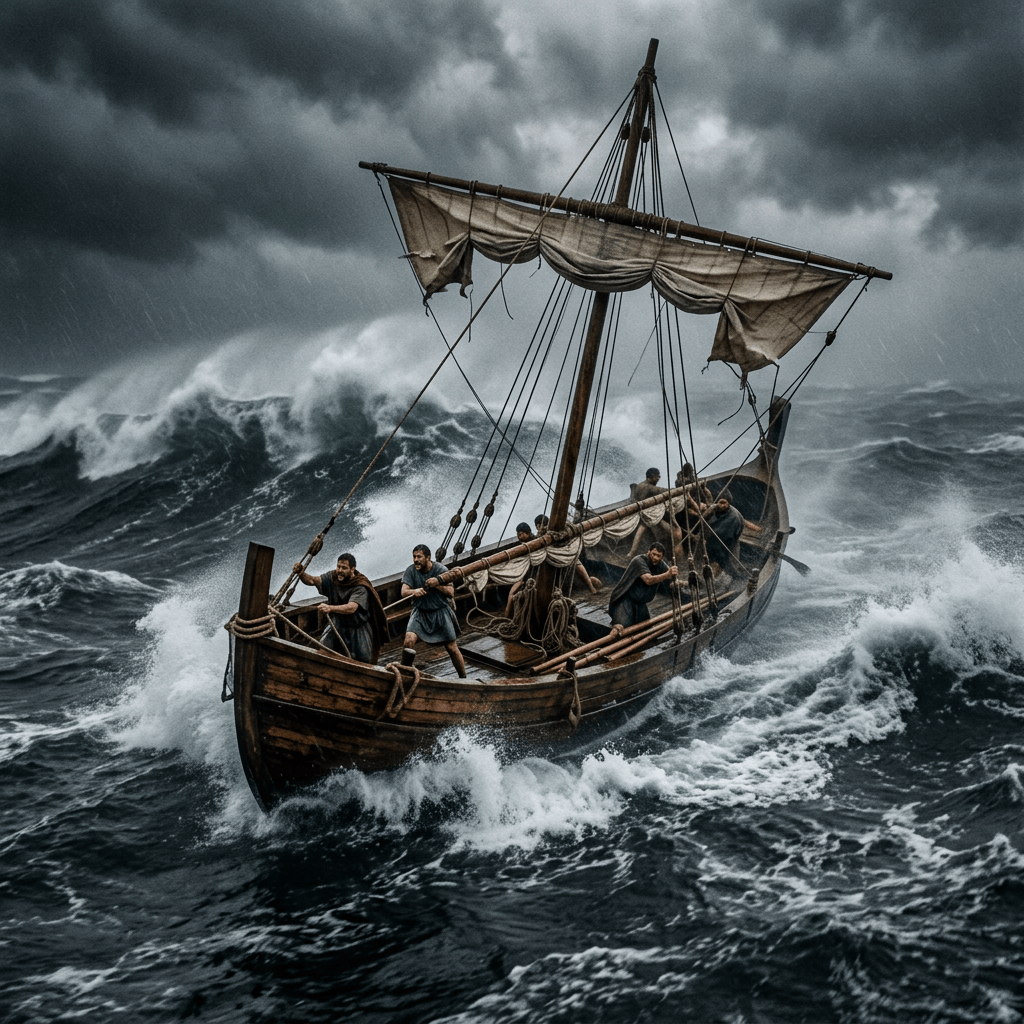
The mission of Tychicus was marked by physical danger and vulnerability. First-century travel, especially for a man preaching Jesus Christ, was threatened by bandits, sea storms, and arrest. In considering the history of the New Testament church, this journey was especially high-stakes. In his possession, Tychicus had the manuscripts of what would become the New Testament books of Colossians, Ephesians, and Philemon. Tychicus’s role was to transport these fragile documents from the Apostle’s hand to the local pastor, in the case of Colossae, Epaphras. The fortification of the New Testament church relied on this transport to create a firm link between the Apostle and the local minister. And yet Christian history has largely forgotten Tychicus in the ranks of the incredibly faithful men.
The Colossian church was in a state of emergency from a theological standpoint. The Apostle would describe Epaphras as one who was always laboring fervently for the congregation. However, false teachers surrounded the congregation with appealing ideas that would pull them away from the truth of Jesus Christ. Thus, the Apostle applied a full scale approach to countering these false teachers. He drafted the blueprint for defending the truth in his letter. Tychicus served as the supply line, bringing the letter to Colossae, and Epaphras remained the guard, the faithful soldier in the place of the battle. The teamwork of the three created a comprehensive theological front. The power behind that teamwork was the inspiration and providence of God.
Tychicus is largely forgotten in history because he left no writings, he performed no signs or miracles, and he did not pastor any churches. However, his absolute trustworthiness and faithfulness held the apostolic network together and delivered the Apostle’s writings to the people. The lesson each disciple should take from the verses about Tychicus is that the preservation of the faith depends first on God’s providence and second on entirely ordinary people, doing unsung, reliable work in the Kingdom of God. It is each disciple’s responsibility to be a faithful steward of what God has given and to hand the truth of Jesus Christ to the next generation of believers.
Our Prayers are with you daily,
Brother Jeremiah


Leave a comment