From the Pastor’s Desk:
“And when this epistle is read among you, cause that it be read also in the church of the Laodiceans; and that ye likewise read the epistle from Laodicea.”
Colossians 4:16
Good Morning Dearly Beloved,
The last three verses (Colossians 4:16-18) form a closing section of this book that shifts from dense theological exposition and practical exhortations to intimate greetings and administrative logistics. However, the Bible student should not dismiss our study verse as merely intended for the immediate audience in the 1st century. These verses give the modern disciple insight into Apostolic authority, the practical realities of the early church, and the forming of the New Testament.
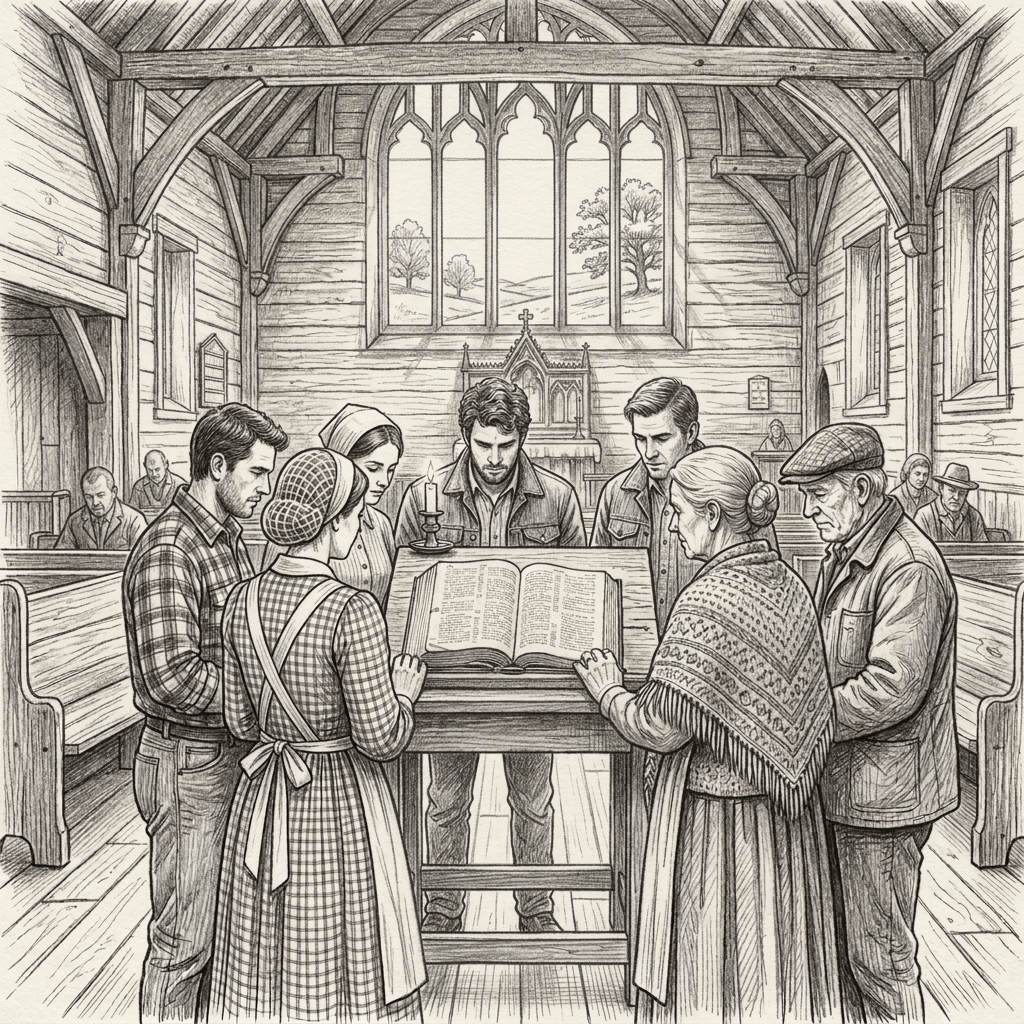
The first instruction of the verse is captured in the Apostle’s statement, “when this epistle is read among you.” This verse provides a direct instruction for the Colossian church. It was an instruction often repeated by the Apostle (Romans 16:1-2, Romans 16:21-23, 1 Thessalonians 5:27). On a practical level, the reading of the letter was necessary because much of the congregation would have been illiterate and because personal copies of the letter did not exist. Furthermore, the reading of the letter reinforced other lessons the Apostle was teaching. For instance, it put all believers — men, women, children, masters, and servants — on the same level. They all received instruction from the Apostle in a public setting and in the same manner. The reading of the letter also aligned with the instruction that no scripture was to be of private interpretation (2 Peter 1:20-21). These lessons carry forward through all generations of believers.
The second instruction from the Apostle was to create a common truth among all of the churches in the region. The Apostle in this instance instructs believers to make the letter to Colossae to be read in Laodicea and, likewise, the letter to Laodicea to be read in Colossae. They also likely heard the letter written to Ephesus. A similar thought is captured in Galatians 1:2, as the Apostle writes to all “the churches of Galatia,” and by the Apostle Peter when he opens 1 Peter. Importantly, the congregations were not simply reading a letter and passing it along. They often actively copied, carried, and forwarded apostolic letters to establish a shared doctrine across the region. This mutual exchange created unity across local assemblies. The practice ensured that ministers and churches taught the same gospel regardless of location.
Finally, we must consider the final phrase of our study verse. The Apostle instructed that “the epistle from Laodicea” should also be read in Colossae. Historical records do not provide certainty regarding the nature of the epistle referenced. There are many opinions and views as to what was meant by this phrase, but, for this study, I adopt the lost letter view. I believe that the Apostle wrote a letter of instruction to Laodicea, inspired by the Holy Spirit, that God did not preserve for use in the canon of Scripture. The reality is, regardless of the view on this particular epistle, not every word an apostle spoke or wrote was intended by the Holy Spirit to be universally binding scripture for all centuries. A reference to an epistle that was not preserved for later generations is an excellent reminder that the work of the apostles was far greater and more complex than simply what is captured in scripture.
Our study verse this week provides a rare “behind-the-scenes” window into the genesis of the New Testament. First, the apostle wrote under divine authority. Second, the local body read aloud the text for all to hear. Third, some of the disciples copied and circulated the text to neighboring churches. Fourth, the Holy Spirit superintends the collection and preservation of these exact texts. Today, we hold in our hands the very Scriptures that God intended to preserve out of the 1st century. By the providence of God, we have a complete, sufficient, and unshakeable rule of faith today.
Our Prayers are with you daily,
Brother Jeremiah


Leave a Reply